 CN
 EN
 News

Konsemi Appears at the 21st CISMEF Integrated Circuit Specialized and Sophisticated Exhibition: In the AI Era, the "Terminal Evolution Theory" of Storage
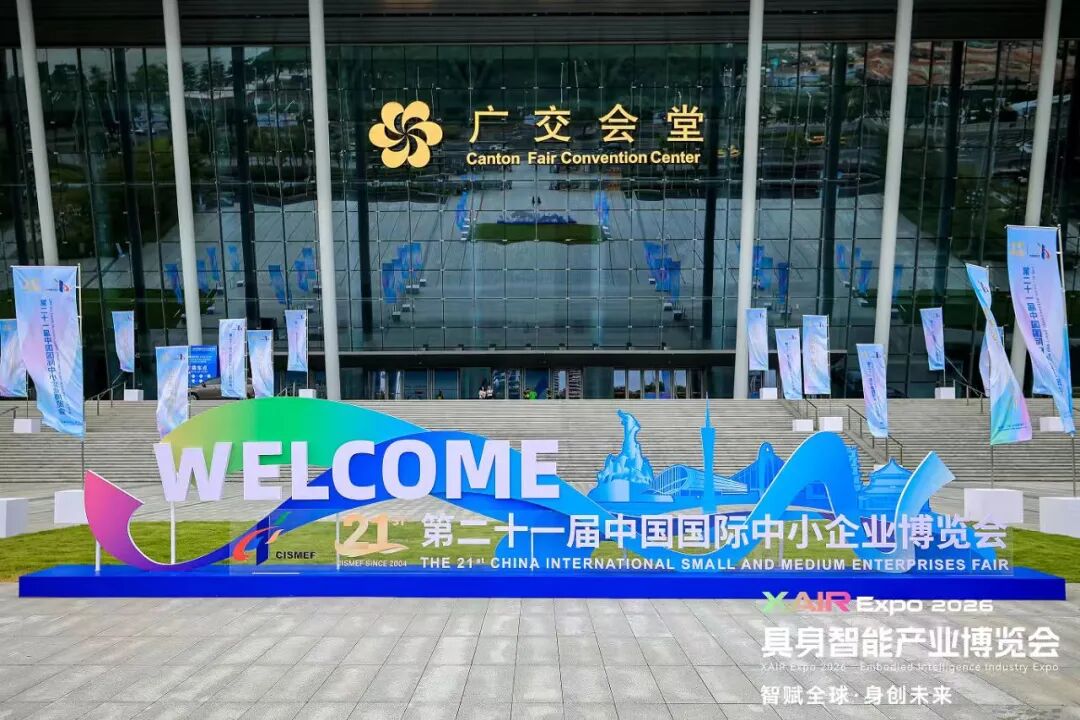
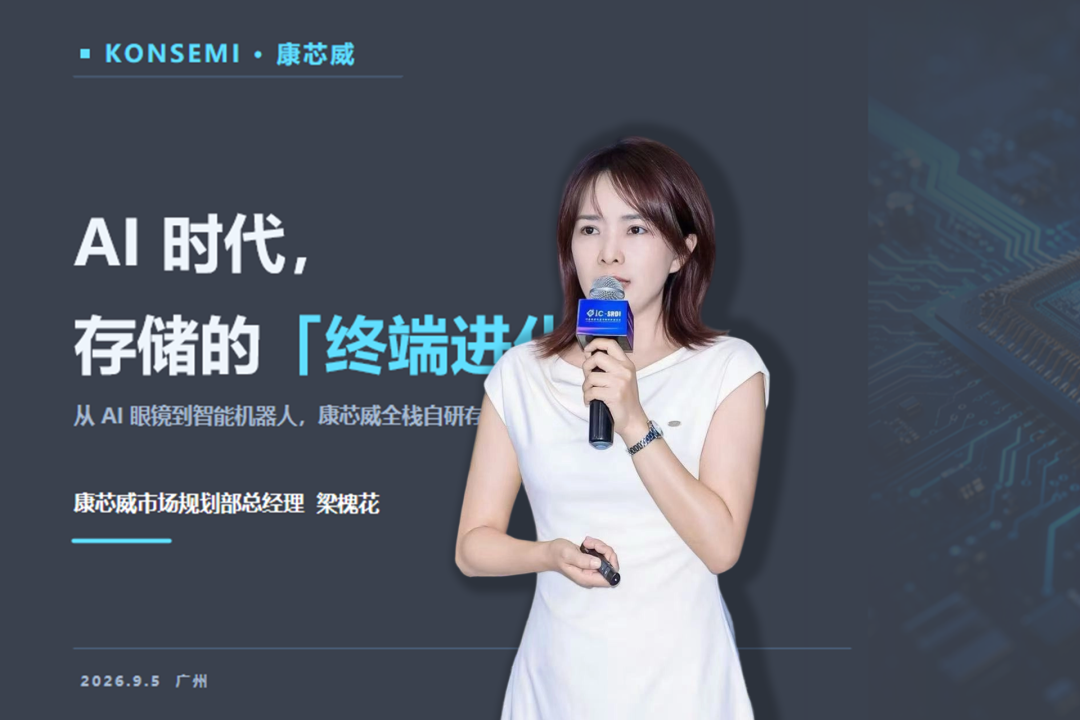
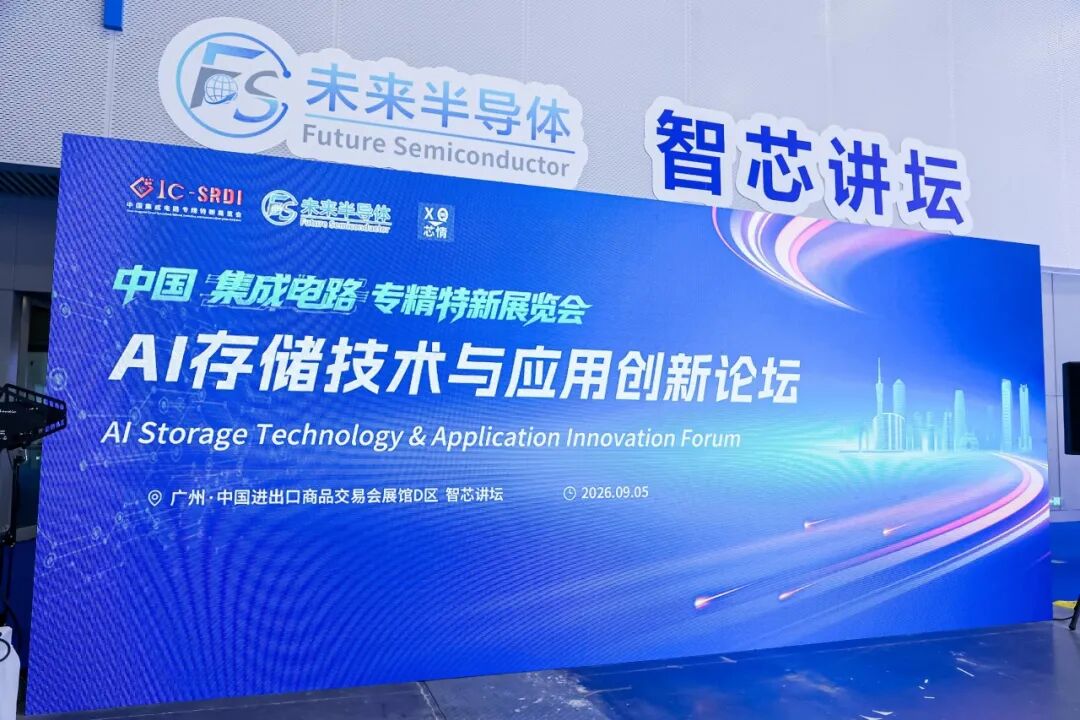
On September 5, the 21st China International Small and Medium Enterprises Fair · Integrated Circuit Specialized and Sophisticated Exhibition was held in Guangzhou.Konsemi was invited to attend the "AI Storage Technology and Application Innovation Forum," where Liang Huaihua, General Manager of the Market Planning Department, delivered a keynote speech titled "In the AI Era, the 'Terminal Evolution Theory' of Storage," starting from the underlying storage architecture and deeply analyzing the transformation trends and breakthrough paths of the storage industry under the wave of AI terminals.
Cloud Descends to the Terminal, Storage Transforms
In her speech, Liang Huaihua pointed out that the AI industry is undergoing a key turning point from "cloud inference" to "edge deployment." AI is accelerating from the digital world into the physical world.
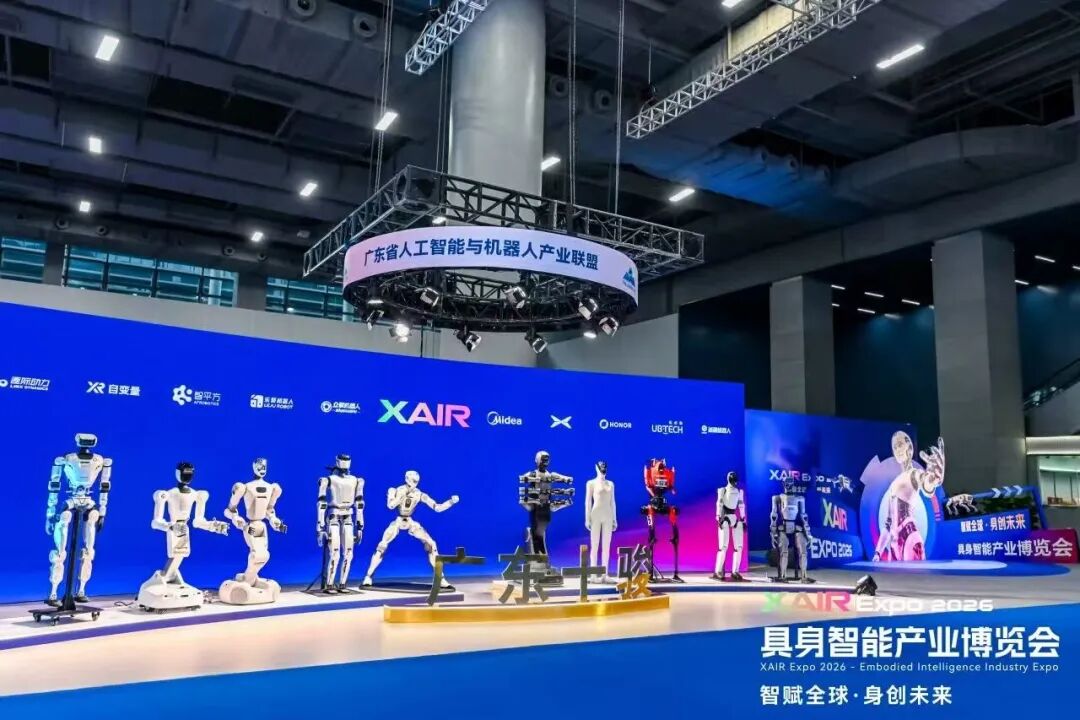
In this process, robots have become a category with extremely stringent storage requirements. Industrial robots are moving from repetitive programming to AI autonomous decision-making; service robots are moving from single functions to multimodal interaction; humanoid robots will usher in a period of intensive prototype releases and mass production verification in 2025-2026.
The essence of robots is evolving from "actuators" to "decision-making entities," and storage bandwidth, latency, and reliability directly determine the upper limit of the decision-making chain. However, the robotics industry is facing an "iron triangle" dilemma, in which the three constrain each other:
Power wall — multimodal perception requires continuous high-load operation, and edge large-model inference power consumption can reach 5W~15W+, while current mobile/humanoid robot battery life is generally less than 2 hours. The stronger the computing power, the higher the power consumption, and the shorter the battery life, forming an irreconcilable structural contradiction.
Storage wall — multi-sensor data is fused in real time, with continuous writes of several MB to tens of MB per second, and large-model parameters need to complete weight reading within milliseconds. Visual SLAM requires completing single-frame feature extraction and pose calculation within <30ms, and the first token latency of edge large models needs to be <500ms, otherwise the interactive experience breaks down. Data movement latency is becoming the "slow variable" in the decision-making chain.
Reliability wall — industrial scenarios need to withstand -40°C~85°C wide temperature, strong vibration, and electromagnetic interference; service and humanoid robots frequently start and stop, experience abnormal power outages, and continue high-intensity read/write operations. Once data is corrupted or storage fails, it means the robot "loses memory" or even "loses control." Consumer-grade storage standards are completely unable to meet the reliability requirements of the physical world.
The above three major bottlenecks are coupled with each other: pursuing computing power leads to soaring power consumption and collapsed battery life; pursuing thinness and lightness leads to limited heat dissipation and performance degradation; pursuing reliability leads to sharply increased costs and difficulty in popularization.
What the robotics industry urgently needs is a storage solution with "near-data computing" capabilities, fundamentally solving the pain points of high latency and high overhead caused by high-frequency cross-chip data movement.
Full-Stack Self-Development, Storage Breakthrough
Facing the above challenges, Konsemi has provided a systematic technical solution. As an embedded storage controller chip company with full-stack self-development capabilities from core IP, hardware SoC, firmware to system core technologies, Konsemi relies on its deep understanding of NAND media characteristics and independent control of controller scheduling algorithms to solve the robot storage dilemma from four technical dimensions:
First, highly integrated controller design. By optimizing chip pin layout and compact packaging, it reduces the overall board layout space requirements and frees up more internal space for batteries, heat dissipation, and sensors, adapting to compact devices such as AI glasses and humanoid robot dexterous hands.
Second, full-link dynamic power management. The controller embeds a multi-level power scheduling unit, supporting DVFS, fast active/sleep switching, and current spike smoothing control. Compared with traditional mainstream solutions, the power consumption of the storage subsystem can be reduced by 30%~50% in typical cases, effectively extending robot battery life.
Third, intelligent data prefetching and read/write scheduling. The firmware layer's self-developed prefetching algorithm can predict robot data needs and load them into SRAM cache in advance, reducing effective access latency; at the same time, it deeply optimizes the eMMC 5.1/UFS protocol to fully release bandwidth potential and provide a low-latency data path for real-time decision-making.
Fourth, self-developed LDPC error correction and power-loss protection. The self-developed LDPC soft-decision decoding has significantly improved error correction capability compared with traditional BCH. Combined with bad block management and power-loss protection (PPL) circuits, it supports -40°C~85°C wide-temperature operation and ensures data integrity and system reliability.
Liang Huaihua emphasized that the unique value brought by full-stack self-development of core technologies lies in the "1+1>2" software-hardware synergy effect. The deep binding of self-developed controller + self-developed firmware, with chip design reserving hardware acceleration instructions for firmware, firmware scheduling based on measured chip characteristics, and the system iterating feedback based on real scenarios, forms a three-way closed loop that significantly improves storage subsystem efficiency.
Since its founding, the company has adhered to the route of full-stack self-development of core technologies, independently controlling source code and core patents, and possessing customized capabilities to quickly respond to differentiated needs of emerging terminals such as robots and AI glasses.
Deeply Cultivating the Foundation, Intelligently Leading the Future
The theme of this expo was "Artificial Intelligence Empowering Small and Medium Enterprises," among which the "AI Storage Technology and Application Innovation Forum" gathered forces from all parties in the storage industry chain, including design, production, and application, to conduct in-depth discussions around hot directions such as flash memory chips, storage controllers, advanced packaging, terminal storage, and humanoid robots.
As a specialized and sophisticated enterprise, Konsemi appeared at this forum, not only demonstrating the full-stack technical accumulation of domestic embedded storage controllers in the AI terminal field, but also reflecting the key positioning capability of the domestic storage industry chain in the AI era, building a full-link independently controllable technical barrier.
Looking to the future, Konsemi has formulated a clear technology evolution roadmap:
Short term (2026-2027): help industrial robots and service robots popularize industrial-grade eMMC solutions, continuously optimize LDPC error correction performance and wide-temperature reliability, and at the same time optimize power-loss protection response time for high-frequency start-stop scenarios such as sweeping robots and delivery robots, further reducing the data loss rate under abnormal power outages.
Mid term (2027-2028): accelerate UFS controller layout, focusing on high energy efficiency optimization and ultra-low latency control. Compared with eMMC, UFS can achieve several times the improvement in interface bandwidth. Combined with self-developed firmware-layer command queue depth optimization and priority scheduling, it provides higher-bandwidth, lower-latency storage support for humanoid robot mass production.
Long term (2028+): continue to deeply cultivate the full-stack self-development technology system and promote near-data computing as a standard for robot storage — that is, integrating lightweight computing units into the storage controller to directly complete part of the preprocessing on the data storage side, reducing cross-chip data movement, and effectively alleviating the "storage wall" bottleneck from the architectural level.
At the end of the speech, Liang Huaihua said that Konsemi will continue to take full-stack self-development of core technologies as its core competitiveness, adhere to integrated technological innovation from the IP layer, chip layer, firmware layer to the system layer, serve as a highly reliable "storage foundation" for the robotics industry, and work with industry partners to jointly promote the development of China's AI terminal storage ecosystem.